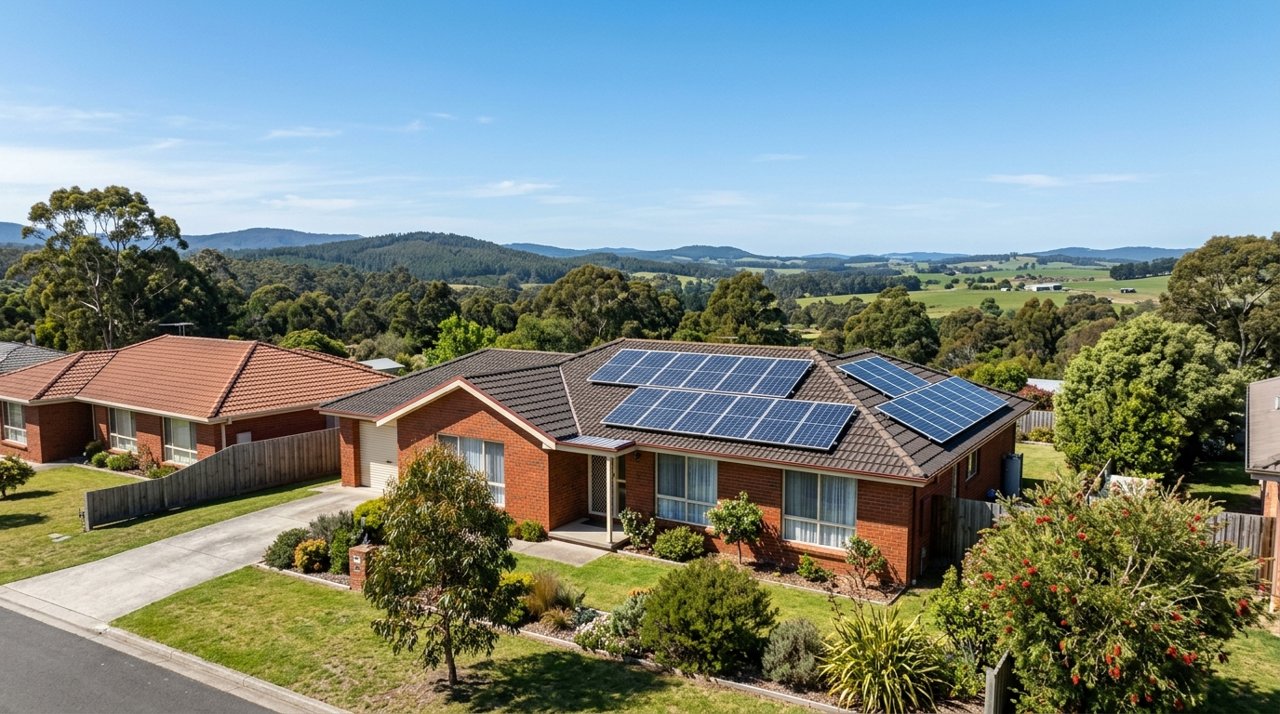
Across the Mersey Valley and North-West Tasmania, local councils are making strides in integrating renewable energy solutions, with Devonport City Council actively installing rooftop solar and electric vehicle (EV) charging infrastructure. Meanwhile, a broader Tasmanian initiative for community batteries is set to benefit North-West ratepayers, including those in Latrobe and Kentish municipalities.
Devonport City Council has been a proactive adopter of renewable energy. In January 2022, a 55-kilowatt (kW) microinverter-based solar power system, comprising 148 solar panels, was installed on the paranaple arts centre in Market Square. This system is projected to pay for itself within seven years through reduced electricity costs. This installation adds to the Council’s existing solar capacity, which stood at at least 50kW across three of its largest facilities prior to the paranaple arts centre project. The Council’s Environment Strategy 2019–2024 highlighted the investigation of alternative power generation, including solar and battery storage, as a high priority, alongside a pledge to install renewable energy on council buildings and provide fast-charging infrastructure for electric vehicles.
In line with these commitments, Devonport’s multi-story carpark became home to a fully operational public EV fast charging station by January 2021. This station was supported by a $50,000 grant from the Tasmanian Government’s Electric Vehicle ChargeSmart Grants Program. Devonport currently has five known public charging stations, strategically placed across the city, with charging costs generally ranging from $0.30 to $0.80 per kilowatt-hour (kWh). These initiatives aim to reduce the city’s carbon footprint and offer convenient charging options for residents and visitors alike.
While Latrobe and Kentish Councils have not detailed specific rooftop solar installations on their own buildings or EV fleet charging initiatives in recent public reports, they are engaged with the broader renewable energy transition. Latrobe Council’s 2023/24 Annual Report indicates its support for the North-West of Tasmania to be recognised as a renewable energy hub, including the significant Battery of the Nation project, and maintains engagement with Hydro Tasmania and TasNetworks on project updates. The Council also approved a 12.5-megawatt (MW) solar park in Wesley Vale by Epuron in 2018, which included a “storage cubicle” as part of the proposal, though this is a private development. More recently, Latrobe Council is involved in the planning process for Firmus Technologies’ AI data centre in Wesley Vale, which has substantial electricity demands and plans for a separate research and development facility to test energy storage systems.
Kentish Council’s 2024/25 Annual Report notes that the Kentish community is “well placed to maximise the benefits of the transition to renewable energy”. The Cradle Coast Authority (CCA), of which Kentish Council is a member, actively provides councils and communities with information regarding the challenges and opportunities associated with the shift to renewable energy.
A significant development for North-West ratepayers is TasNetworks’ community battery pilot program. TasNetworks is installing up to eight community batteries across Tasmania, with two already delivered by the second quarter of 2025, including one at Shorewell Park in Burnie. The remaining six batteries are estimated for delivery by the second quarter of 2026. These batteries, funded by the Australian Renewable Energy Agency (ARENA) and the Department of Climate Change, Energy, the Environment and Water (DCCEEW), are designed to store excess solar energy generated from rooftop panels during the day and release it back into the network when demand is high, such as in the evenings.
These community batteries offer multiple benefits to ratepayers. They enable more rooftop solar and electric devices, like EV chargers, to be connected to the grid, strengthen the electricity network, and can help share more renewable energy locally. By reducing demand during peak times, they can also help stabilise local power supplies and potentially contribute to lower wholesale electricity prices, which could flow through to consumers. The Shorewell Park battery, being in Burnie, directly impacts the energy landscape for communities across the North-West.